📢🌱 Second Saturdays: Volunteer at the Desert Farm.May 9th

Environmental Justice · Antelope Valley, LA County

From Dust to Soil. From One to All.

A data-informed case for investing in LA County's most heat-vulnerable, least-served desert communities—through nature-based solutions, community-led restoration, and youth STEM education.

501(c)(3) · EIN 92-2164539 · In partnership with USDA NRCS, USC, & Monarch Watch

East Lancaster desert landscape showing heat-vulnerable mobile home community with minimal tree canopy
2026Working Paper

The Problem We Address

Why East Lancaster? An Environmental Justice Imperative

East Lancaster sits at the intersection of three compounding vulnerabilities: extreme heat exposure, limited green space access, and historical underinvestment in LA County's desert communities.

110°F+Summer highs in Antelope Valley—15°F hotter than coastal LA1
0.3%Tree canopy coverage vs. 15% countywide average2
2× higherHeat-related emergency visits than LA County average3

Our Working Paper documents why regenerative land stewardship in East Lancaster isn't just ecologically sound—it's an equity intervention. By planting climate-adaptive Tiny Forests, delivering nature-based STEM to Title I schools, and cultivating community through arts and culture, we address the root causes of climate vulnerability: isolation, disinvestment, and lack of green infrastructure.

Sources: 1LA County Climate Vulnerability Assessment (2023); 2American Forests Tree Equity Score; 3LA County Department of Public Health Heat Mortality Data.

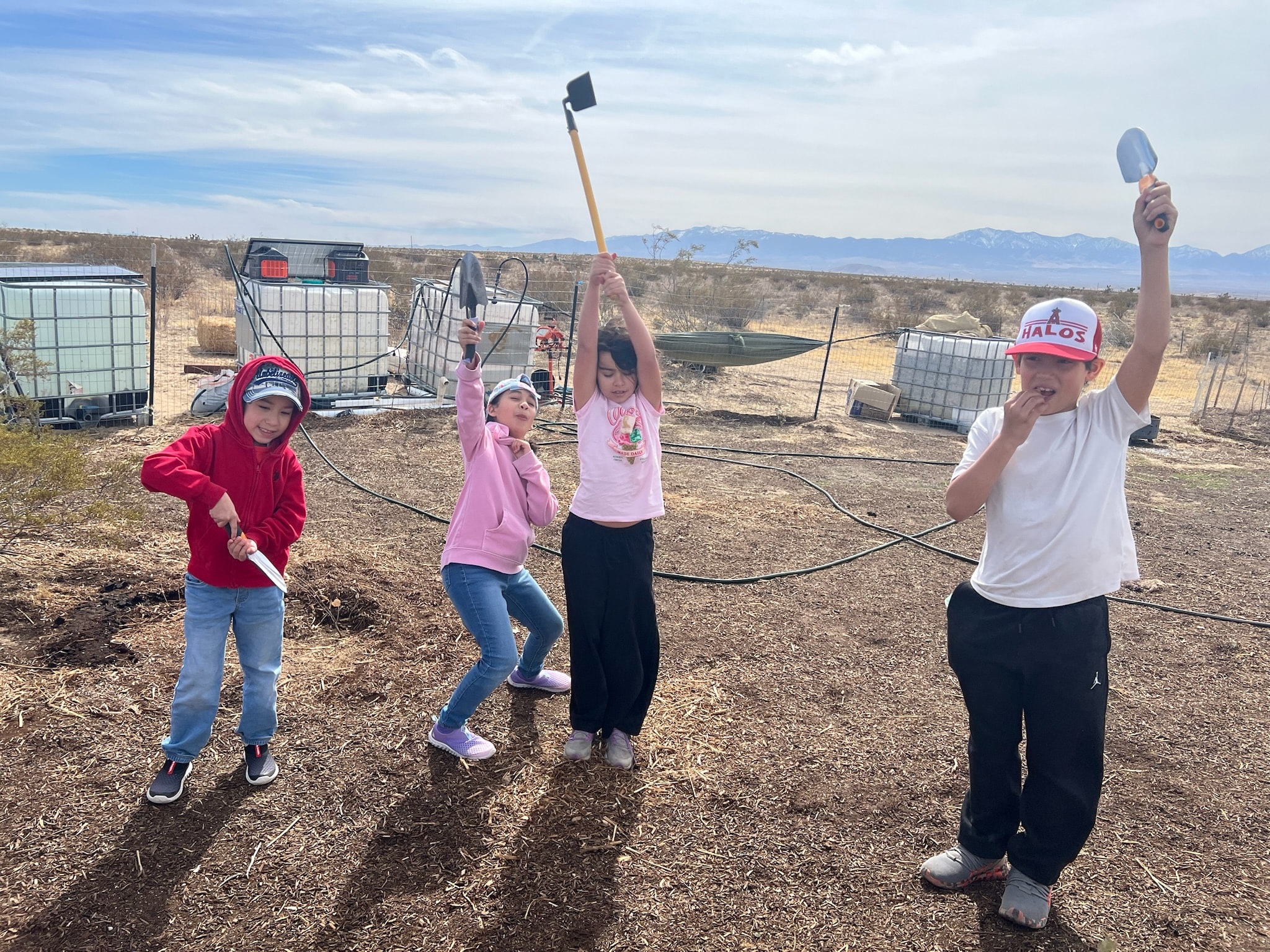
Community members planting native species at For Every Star, A Tree farm in East Lancaster

Evidence Base

What the research says about community-led ecological restoration

Peer-Reviewed Foundations

🌿
Nature & Mental Health

Exposure to green space is associated with reduced anxiety, depression, and cortisol levels—particularly in communities with limited park access.

WHO, 2016; Bratman et al., 2019
🤝
Collective Stewardship & Belonging

Community gardening and shared land stewardship are among the most effective interventions for reducing social isolation in rural and peri-urban populations.

Kingsley et al., 2009; RHS, 2021
🌡️
Urban Heat & Equity

Tree canopy and green infrastructure reduce surface temperatures by up to 10°F. Low-income communities receive 15% less canopy coverage than higher-income neighbors.

EPA, 2022; American Forests, 2023
🌱
Place-Based Learning

Nature-based STEM education improves academic outcomes, environmental stewardship behavior, and student wellbeing—especially for underserved youth.

NAAEE, 2019; Kuo et al., 2019

Our Theory of Change

How we turn degraded land into community resilience

Decades of research confirm what our Earthworkers experience every Saturday: when we tend land together, we heal together. Our approach integrates Miyawaki-method native forest restoration, regenerative food growing, pollinator habitat cultivation, and nature-based STEM education—combining nature-based solutions with the social infrastructure needed to sustain them.

When isolated, heat-vulnerable communities gain access to green space and the relationships formed while tending it, we develop the ecological literacy, climate resilience, and sense of belonging that allows us to thrive across generations. Studies show ecological restoration cannot be maintained without community...and community cannot be maintained without strong, emotional bonds.

Inside the Working Paper

12 pages of data, methodology, and recommendations

  • Section 1: Environmental Justice Context — Heat vulnerability, green space inequity, and historical disinvestment in the Antelope Valley
  • Section 2: Methodology — Miyawaki-inspired dense planting adapted for Mojave conditions; soil health monitoring protocols
  • Section 3: Program Model — How EarthSTEM, Sunflower Kits, and "of Indigo" events interconnect to build resilience
  • Section 4: Early Outcomes — Soil organic matter increases, biodiversity counts, community retention data (2021–2025)
  • Section 5: Recommendations — Policy, funding, and replication pathways for desert-adaptive regeneration
LA County TK-5 students learning soil science at For Every Star, A Tree

Students from Palmdale Unified School District participate in an EarthSTEM field trip at our East Lancaster farm.

Transparency & Citations

Full methodology, data sources, and limitations

Data Sources

  • LA County Department of Public Health: Heat Mortality & Morbidity Data (2020–2024)
  • American Forests: Tree Equity Score API (2023)
  • USDA NRCS Web Soil Survey: Antelope Valley Soil Series Data
  • iNaturalist: Biodiversity observations at our farm site (2021–present)
  • Internal soil testing: Organic matter %, water infiltration rates, microbial activity

Methodological Notes

  • Soil tests conducted quarterly using Cornell Soil Health Assessment protocols
  • Temperature loggers deployed at 3 points in forest vs. 3 control points (500 ft distance)
  • Community surveys administered post-event using 5-point Likert scales + open response
  • All youth program data collected with parental consent and IRB-aligned protocols

Limitations

  • Small sample sizes for early-stage outcomes (n=50 students; n=150 Earthworkers)
  • Temperature reduction data reflects summer 2024 only; multi-year monitoring ongoing
  • Self-reported community well-being metrics subject to social desirability bias
  • Working paper represents interim findings; full evaluation report planned for 2027

Open Access: This Working Paper is shared under a Creative Commons Attribution-NonCommercial 4.0 International License. You are free to share and adapt the material for non-commercial purposes, with attribution to For Every Star, A Tree.

Want to go deeper?

We welcome feedback, collaboration, and critical engagement with this work. If you're a researcher, funder, policymaker, or community partner interested in desert-adaptive regeneration, we'd love to connect.