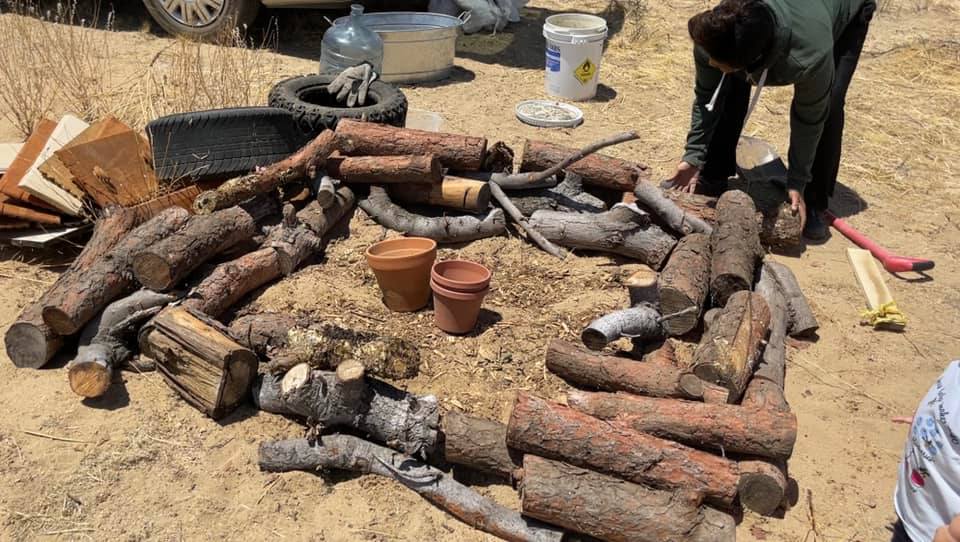
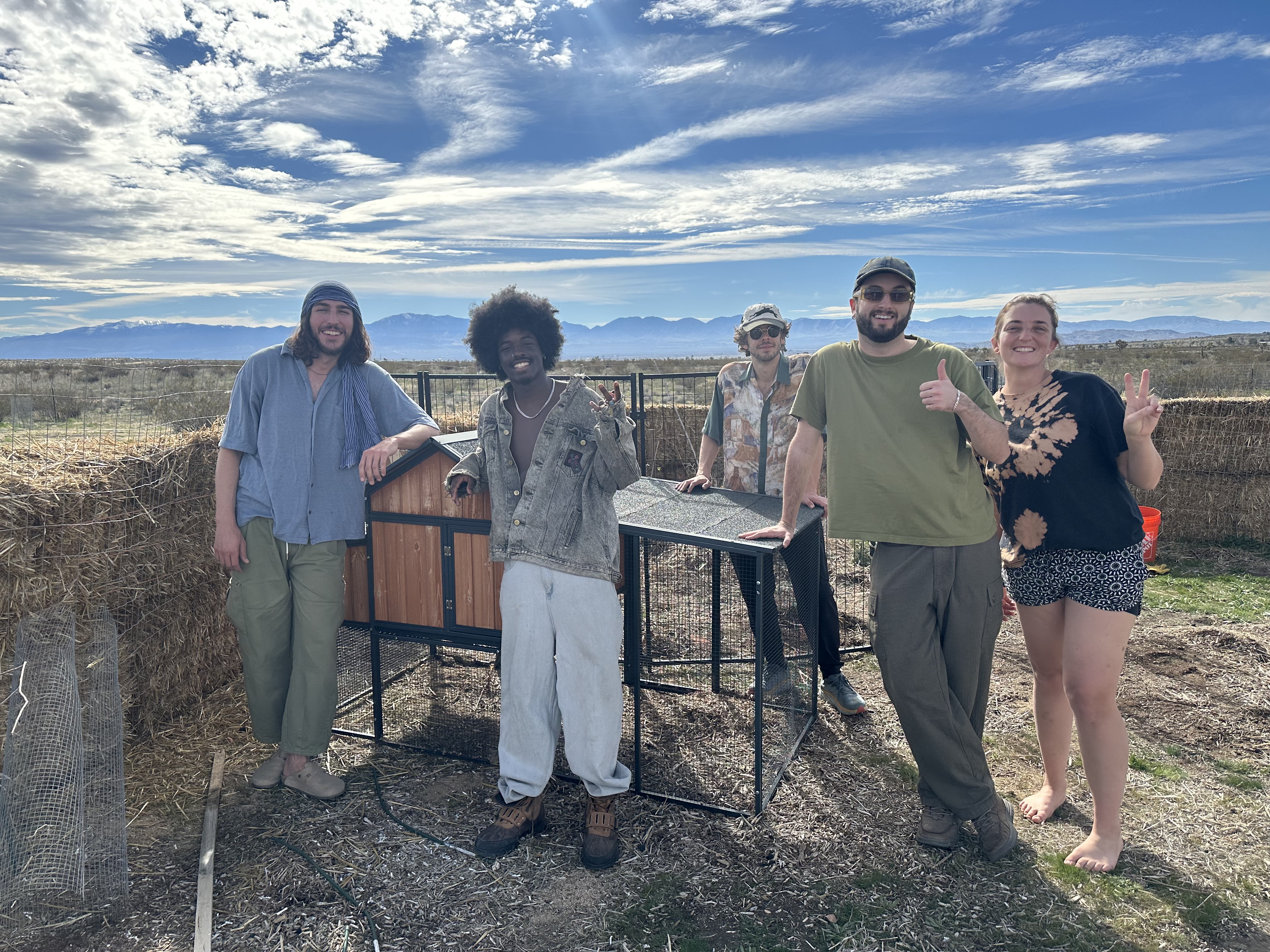
📢🌱 Second Saturdays: Volunteer at the Desert Farm.May 9th

Our Story · Est. 2021

Earthcare > doomscrolling.

How a single question can grow into a movement.
Timeline

Our History

2021

The Land

For Every Star, A Tree began as an act of faith: what would happen if we cared for a single tree in the desert?

2022

The Starry Night Skoolie

The Starry Night Skoolie was built. It evolved from being our only shelter, to a homey place of refuge for travelers.

2023

The Tiny Forest in the Desert

Our Tiny Forest in the Desert grows from 100 square feet to ~500 square feet (across the entire 10-acre plot).

2024

The Butterfly Garden

We expanded our "Tiny Forest" into a Butterfly Garden, where evidence of increasing biodiversity became harder to ignore. Birds, butterflies, bees, and all manner of insects, reptiles, mammals, pollinators, etc. came out to feast on the small oasis we had grown.

2025

The Shutdown

We hosted our last community planting events and shutdown the Starry Night Skoolie, taking a breath to reorient.

2026

The School

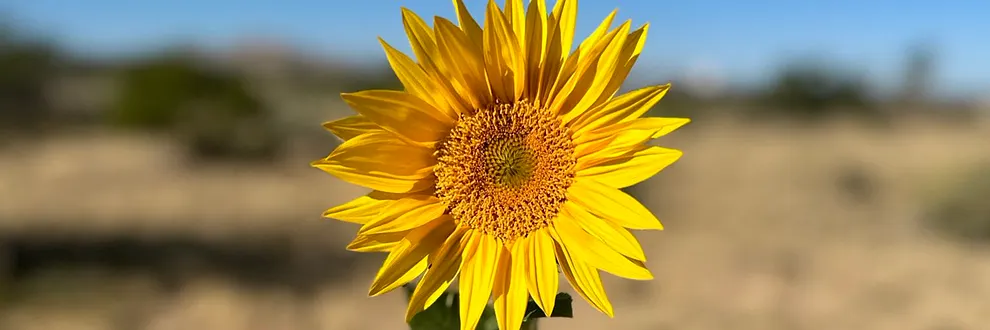
We launched our Nature-Based STEM workshops for local K-12 students, and distributed our first Sunflower Kits and Worm Boxes to families across Los Angeles county.

Read the Full Story

We've documented this journey from the very beginning.

From that very first tree — a western sycamore — to the food forest now taking root, For Every Star, A Tree has always been a poetic attempt at the seemingly impossible. Our open journal, Flow The Desert, captures every challenge, learning curve, small win, and moment of wonder along the way.

Five Years of Earthwork

What the desert taught us.

We did not arrive in Hi Vista with a strategic plan. We arrived with compost, questions, and a deep willingness to be proven wrong. The land was a better teacher than any curriculum we could have designed.

  • 🌱You are never as alone as you feel in the middle of nowhere. The community found us. We didn't recruit it. We simply showed up consistently, and people came.
  • 💧Community, attention, and care is what makes restoration possible. Not equipment. Not funding. Presence.
  • 🪱Small, consistent care matters more than big gestures. A red wiggler worm does more for soil health in a month than a dramatic intervention does in a year.
  • 🔥Action over Intellect. Earthwork over Theory. Heart, overall. The most important thing we ever did was put our hands in the ground. Everything else followed from that.
Read Our Field Notes

2020: The Beginning

On the vision of an oasis: mirage or reality?

There is a story in the Mahabharata, one of the world's oldest epic poems, about a band of brothers who were gifted a great wasteland as a consolation prize.

With patience and care, they transformed their barren inheritance into a thriving city.

---

From that very same poem is a sloka that helped bring For Every Star, A Tree into being:

"One pond is worth ten wells.
One lake is worth ten ponds.
One child is worth ten lakes.
And one tree is worth ten children." —The Goddess Parvati

2021: The Land

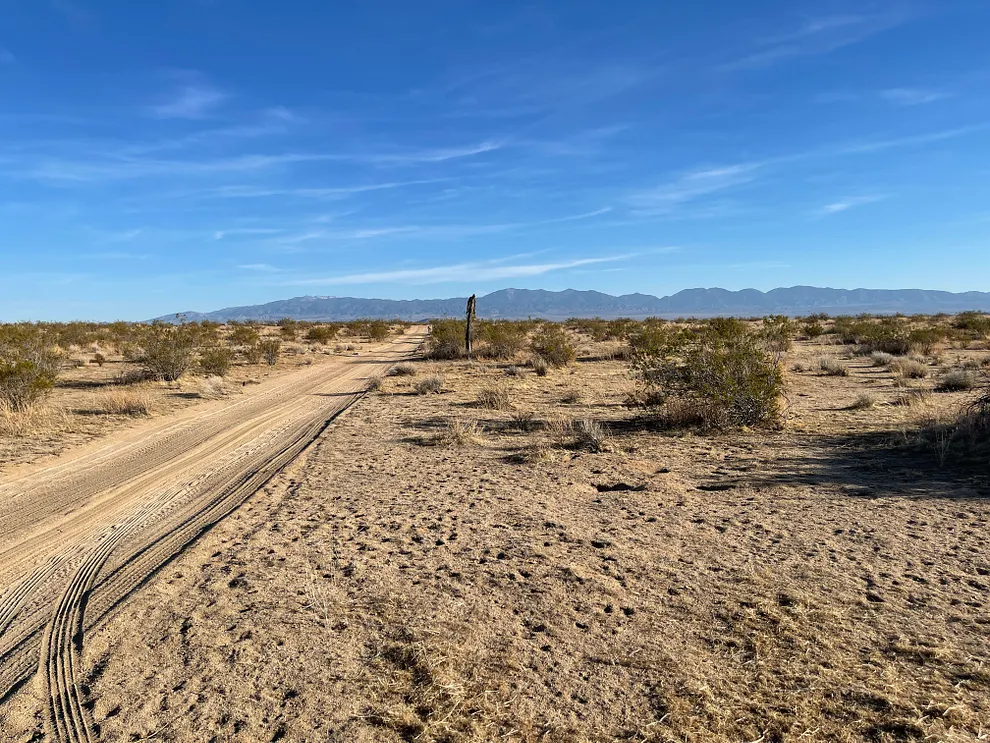
10 acres. No water or shade. Infinite hope.

lived rent-free in our founder's mind for years before she understood why.

It was the middle of the pandemic. The world had retreated indoors, but for one unsheltered mother and her daughter, the desert became the only place that felt safe — a place to be outdoors, worry‑free, and alive. They began talking, dreaming, asking a question that most people dismissed as absurd: what if it were possible to grow a tree in the desert?

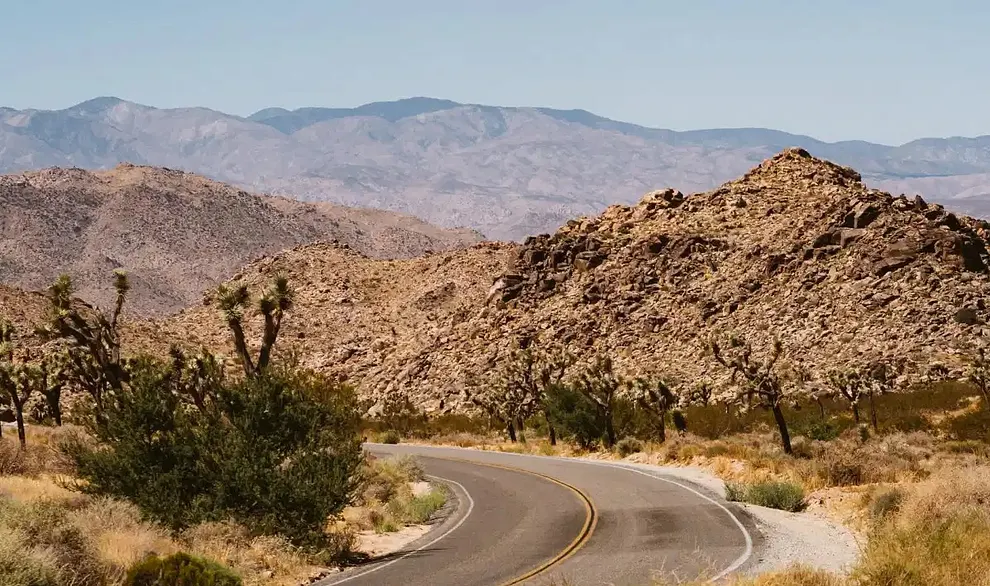
Most people said no. The Mojave is brutal. The soil is dry, compacted, and — according to the USDA — "formed in residuum from granitic rock." Summer temperatures regularly exceed 98°F. There is no shade. No water for miles. Nothing grows here but creosote and dust.

But as they met more and more people in the community — neighbors, dreamers, fellow outsiders — the answer became clear: not only is it possible, it is necessary for survival.

What began as a playful, artistic inquiry — part solarpunk daydream, part guerilla gardening, part mother‑daughter act of faith — started to feel like something more. A calling. A quiet, stubborn rebellion against the narrative that some places are simply too far gone to save.

In 2021, Billimarie Lubiano Robinson drove north out of Los Angeles on her birthday with her young daughter buckled into the back seat. The 10 acres she was about to see had been sold to her by an elderly man in Florida — a former real estate developer who had never visited the land and wanted to trim his portfolio. No one had tended it. No one had named it. It was listed, technically, as barren.

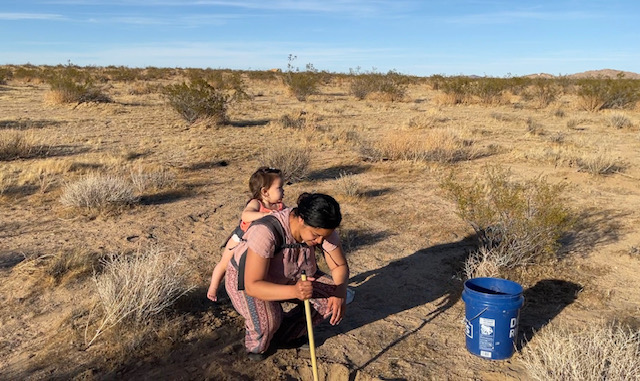
Using Google Maps property boundaries, they walked to the center of the parcel and kept an eye out for rattlesnakes. She touched the soil. She spotted a lone Joshua tree at the edge of the plot — alive, improbably, despite everything. She drove home and started composting.

In 2021, they acquired their first 10‑acre parcel in Hi Vista — an unincorporated community north of Lake Los Angeles, in the heart of East Lancaster. It was a stretch of abandoned, degraded desert soil with a tree equity score of zero, no trash services, no library access, and a homelessness rate hovering around 30%. To call it "overlooked" would be an understatement. It was forgotten.

Friends, family, and neighbors came by to help as they experimented with different growing methods in the middle of nowhere. The sun was unforgiving. Every time they tried to plant, something — or someone — would inevitably come by to destroy it. Rabbits. Wind. Drought. The sheer weight of the Mojave's indifference.

Most would have given up. But the pandemic raged on, and the desert remained the only place that felt free. With soil so dry it crumbled to dust, they continued to add compost, food scraps, and water — small, stubborn acts of care that slowly, imperceptibly, began to change the land.

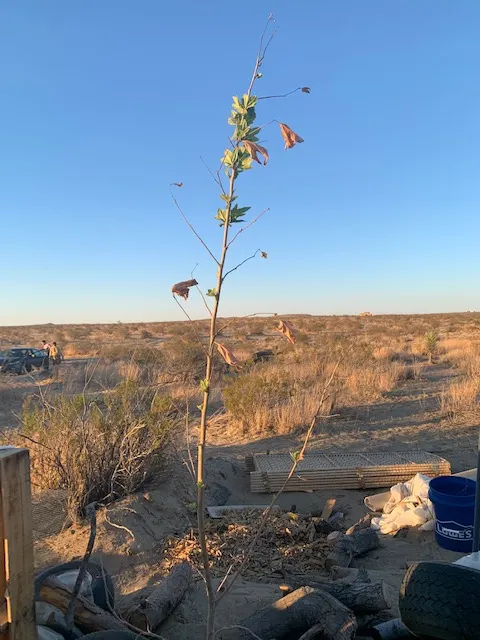
The first tree they planted was a western sycamore. Against all odds, it survived.

2022: Building Community

"Community, attention, and care is what makes restoration possible."

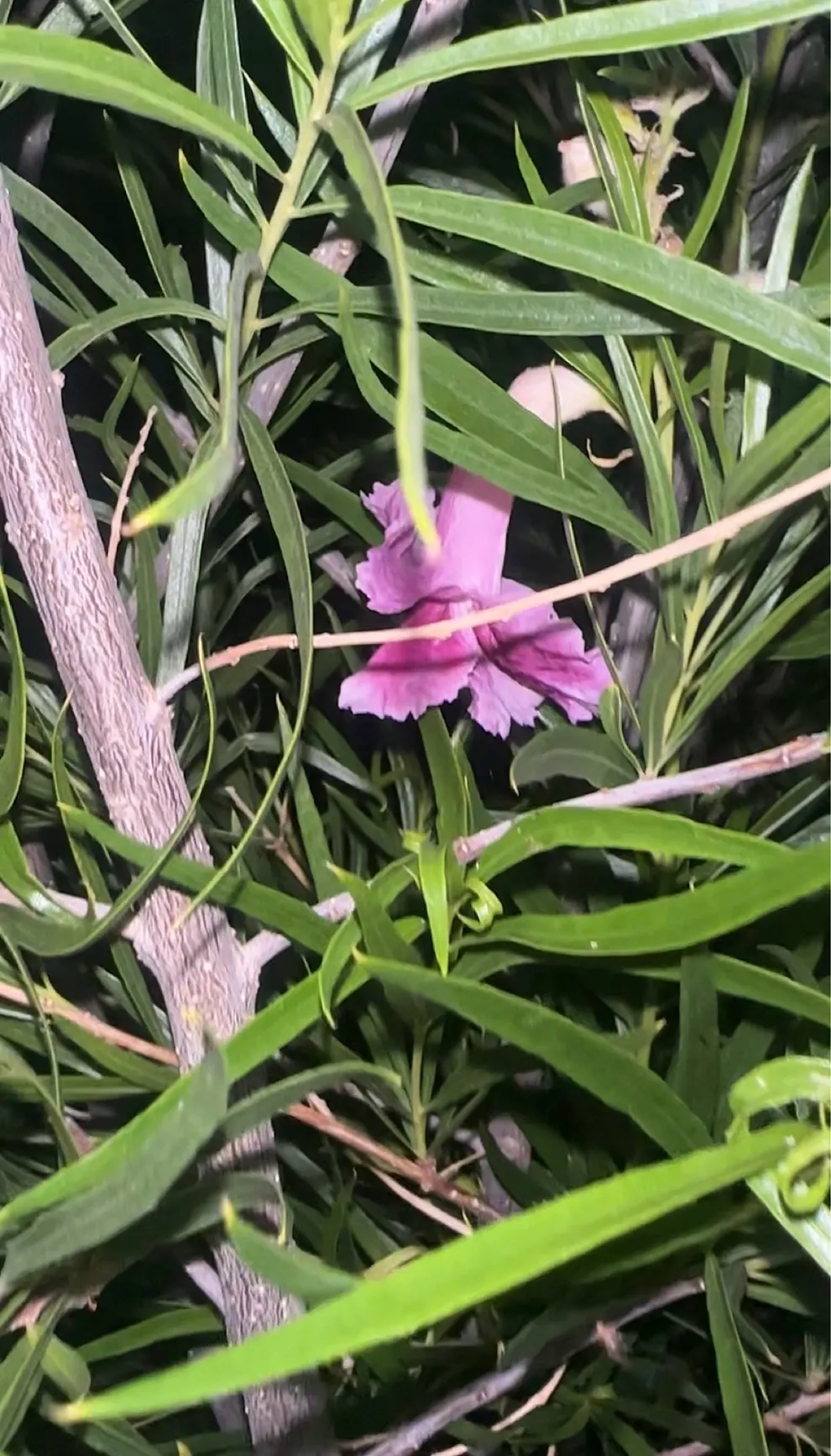
Slowly, the land began to respond. Soil softened where compost had been worked in. Pollinators arrived — first the bees, then the butterflies. Native plants survived where they were told they wouldn't. The desert, in its silence, began to give back.

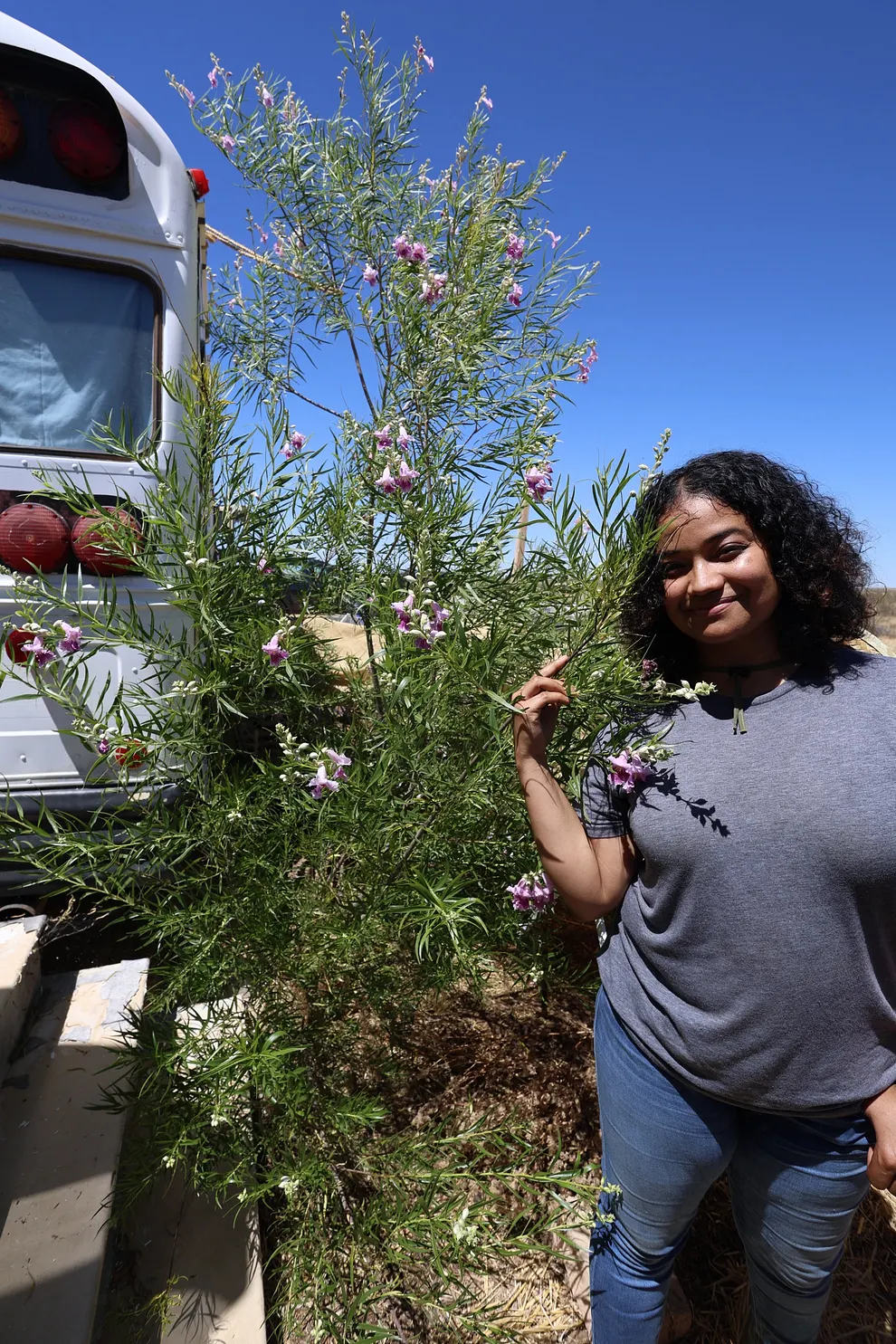
They hosted their first Earthcare Day, bringing together neighbors who wanted to make a difference. A donated school bus — christened the Starry Night Skoolie — became their shelter from the brutal Mojave sun: a tiny, homey place of refuge where everyone was welcome. It was a dry cabin on wheels, surrounded by stars and silence, embodying the solarpunk ethos of making beauty from what others discard.

Word spread. More volunteers arrived. The project that had started as one mother's poetic inquiry was becoming something larger: a community.

2023: A Tiny Forest in the Desert

All you need is 100sqft

By 2023, those small experiments had grown into their first "Tiny Forest" — a dense, biodiverse 100‑square‑foot patch of plantings inspired by the Miyawaki method. The results were undeniable. Even a few square feet of intentional planting could create habitat, shade, biodiversity, and — most importantly — hope.

Then came the first two sponsored Tiny Forests: the Guru Nanak Sacred Forest, sponsored by EcoSikh and Afforestt, and the KG Forest, sponsored by LocalHost. Each was 1,000 square feet — small in size, but each represented something far larger than the life growing inside it. They were living proof that a grassroots, artist‑driven project could attract real investment, real partnership, and real results.

That same year, the project officially evolved into a 501(c)(3) nonprofit, giving shape and structure to something that had already become much bigger than its initial imaginings. The vision? To grow this work into a 10‑acre regenerative oasis: a living example of what is possible when people choose earthcare over extraction, patience over technology, and action over quick dopamine hits.

2024: Quarter-Acre Restored

From one tree to a quarter acre of living soil

By 2024, they were caring for a full quarter‑acre of regenerative earth — filled with native trees, shrubs, wildflowers, pollinator gardens, and community‑grown food. What had started as a mother's act of faith had become a living, breathing ecosystem.

Along the way, they began welcoming volunteers, guests, families, and residents from across Los Angeles County. The Starry Night Skoolie became a Top 10% Airbnb, bringing visitors from around the world who came for the desert stars and left as monthly donors. The farm became a place not only for plants, but for people.

They launched the of Indigo arts and culture series — listening cafes, art gatherings, and community celebrations under the stars — breaking through the rural isolation that had defined Hi Vista for decades. They began distributing Sunflower Kits to families across Los Angeles County, giving children the chance to grow something of their own.

They documented everything. Flow The Desert became their open journal — a Medium publication where they shared the challenges, learning curves, small wins, and moments of wonder on this journey to regenerate the earth. From that very first western sycamore to the food forest now taking root, they held nothing back.

2025 - 2026: Farm to Classroom

Bringing the farm to the next generation of learners

In 2026, For Every Star, A Tree took its boldest step yet: bringing the farm to the classroom. They launched their Farm‑to‑Classroom program — free, nature‑based STEM workshops for TK–5 students at Title I schools across Los Angeles County, aligned with California Common Core standards.

The model was simple and revolutionary: no screens, no cost, just nature‑based awe. Students who had never touched soil, never seen a worm up close, never planted a seed — suddenly had their hands in the earth, learning that science is alive, and that they, too, could be Earthworkers.

Partnerships grew. USDA NRCS and USDA FSA began collaborating on dryland water harvesting and soil health practices. USC and Monarch Watch joined as coalition partners. What had started as a solarpunk daydream was now a professional, respected, and deeply impactful nonprofit with a growing track record of measurable results.

What We Believe

Our Values

🌍

Earthcare First

We believe in caring for the Earth before all else. Every action we take is in service of healing the land for generations we will never meet.

🤝

Radical Welcome

We create space for everyone. Our events are device-free and substance-free, allowing genuine connection to flourish.

🌱

Regenerative Growth

We don't just sustain—we regenerate. We transform degraded soil into thriving ecosystems and isolation into belonging.

Wonder & Gratitude

We gaze in awe at campfires and wonder at the stars. We cultivate gratitude for the earth that sustains us all.

Become an Earthworker

Anyone interested in cultivating a healthier planet is welcome to join our volunteer community.

Ready to Join the Movement?

Become an Earthworker and help us regenerate the Antelope Valley.

This Work Belongs to All of Us

Whether you want to get your hands in the soil, bring your class to the farm, or support our work financially...there is a place here for you.